
The external risks that move valuations and losses, quantified.

Asset managers and insurers use Polecat to turn controversy, ESG and other external risks into decision-ready intelligence: scored for severity, benchmarked against peers, and projected forward. Two decades of data behind every number.

What we quantify for you
ESG controversy Reputational risk Supply chain Regulatory Geopolitical Litigation
Book a risk review Explore the data feed

Trusted across finance and insurance

WTW Aon

We know finance and insurance. Like your teams, our analysts read a controversy as a financially material event with a trajectory and a price. The same engine powers the world’s largest brokers and the investment teams that screen their holdings for external risk.

Current sector reading
Finance & insurance
64
/ 100
escalating3.3 30 days

What is moving the score right now

  • 1Conduct and mis-selling enforcement broadening in the UK
  • 2Commercial real estate exposure repricing in lender portfolios
  • 3Catastrophe loss creep pushing reinsurance renewals higher

Scored from external evidence across news, regulators, NGOs, academia and stakeholder commentary. Refreshed continuously.

Clearer exposure. Fewer surprises.

Polecat quantifies the external risks that move valuations and losses.

Portfolio risk surveillance

Every holding scored for external risk and benchmarked against peers, with escalation flagged early, so an emerging issue reaches you before it reaches the market.

Pre-investment due diligence

An outside-in read on a target’s controversy, regulatory and reputational exposure before you commit capital, not after the deal has closed.

Stewardship and engagement

The evidence base to challenge investee companies on material issues and track whether each one is resolving or getting worse.

Underwriting and risk modelling

Quantified external risk as an input to pricing, accumulation and new product design, including perils the market once considered impossible to price.

Client and broker risk views

Strengthen placements, renewals and client reviews with quantified, peer-benchmarked exposure your clients can see for themselves.

Board and regulatory reporting

A defensible, quantified view of external exposure for risk committees, sustainability disclosures and regulator questions.

Risk against the tape.

Overlay any entity’s risk trajectory on its share price and see how external events translate into market moves. The moment a controversy starts to bite, the moment it recovers, and how far the two track together. Materiality you can measure, for the entities you hold or the entities you cover.

See a live overlay
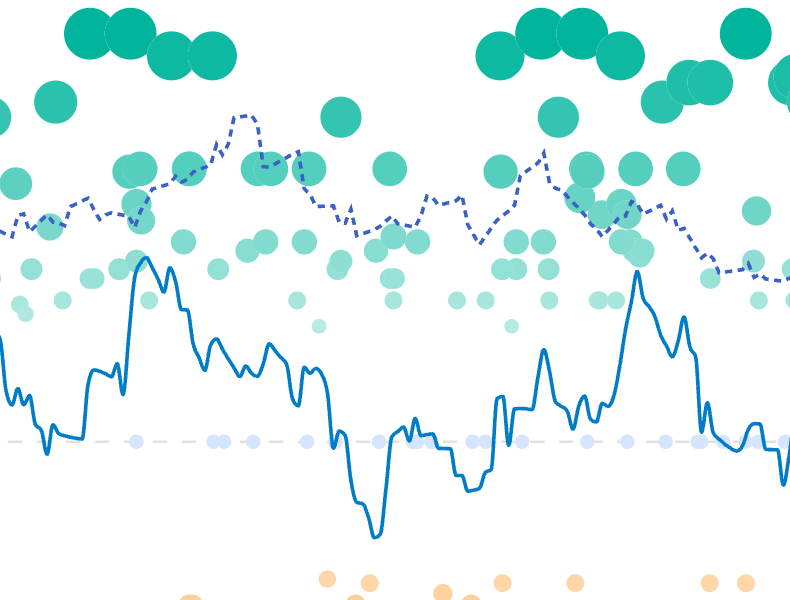
Risk × Price overlay
Risk Index Share price
Drop the risk-vs-share-price overlay screenshot here

The peril the market called unmeasurable.

Reputation was the risk everyone said could not be priced. Willis chose Polecat to power the market’s first Reputational Risk Quantification Model. The same engine now quantifies the exposures that sit on every finance and insurance risk register: supply chain, geopolitical, regulatory and litigation.

What our clients say

“We hoover up every signal, social chatter, regulator memos, and think-tank white-papers, because you cannot model what you cannot see. Polecat handles the volume so my analysts are not trapped in spreadsheets.”

Bob Bowman · Chief Risk Officer, Wendy’s

Built on 20 years of risk data.

20 years of modelled risk behaviour.

Two decades of modelling how external risk behaves: what the first sign of trouble looks like, how fast it escalates, how long it lingers, and what it costs. It is why a general-purpose AI cannot do this: it can summarise what is already public, but it cannot draw on two decades of resolved risk events it has never seen.

Read by analysts fluent in your sector.

Controversy data, market trends and forward projections, interpreted by specialists who know how risk actually moves through finance and insurance, so the outputs land in your language.

Questions from asset managers, insurers and brokers

External risk intelligence is the measurement of risks that originate outside a company, such as controversy, regulatory action, litigation, supply chain failure and reputational damage, scored so they can be compared across holdings, counterparties or insured entities. Polecat provides this as Strategic External Intelligence for finance and insurance teams: every holding or risk is scored out of 100, benchmarked against sector peers and projected forward, with each score traceable to its source evidence. It complements internal risk data and financial analysis with a live, outside-in view. How Polecat works

ESG ratings assess a company’s policies and disclosures at a point in time; Polecat measures what is happening to the company in the outside world, continuously. Polecat scores each external event for severity, velocity, sentiment, authority, reach and history, weighted against two decades of resolved risk events, so an escalating controversy is visible weeks before it appears in a ratings update. Scores are peer-benchmarked and projected three to six months ahead. Most investment teams run Polecat alongside their ESG data rather than in place of it. The risk and compliance view

Yes. Polecat scores every holding in a portfolio for external risk, benchmarks each against its sector peers and flags escalation as it builds. Portfolio surveillance covers ESG controversy, reputational, regulatory, litigation, supply chain and geopolitical exposure, drawn from more than 1.4 million premium sources across 195 countries. Teams receive the result as a live dashboard, a daily or weekly briefing, or a data feed into their own models. Holdings can be uploaded as a list to establish the baseline view.

Yes. Polecat’s coverage does not depend on regulatory filings or share price data, so private companies, portfolio companies and subsidiaries are scored in the same way as listed groups. For private equity and private credit teams, this provides an independent read on controversy, regulatory and reputational exposure across a fund’s holdings, including businesses that produce little public reporting of their own. New entities can be added and backfilled against the historical archive.

Insurers and brokers use Polecat to quantify external and reputational risk for pricing, accumulation and product design. Polecat built the market’s first Reputational Risk Quantification Model, with WTW as its first client, which converts external events into measured exposure with a timeline and a probability. Underwriters use it to assess a risk before binding; brokers use peer-benchmarked exposure in placements, renewals and client reviews. How we work with partners

Yes. Polecat supplies risk feeds, scores and dashboards that brokers and advisers deliver to their clients under their own brand, within their existing client review and placement process. Polecat works with brokers including WTW, Aon, Marsh and Lockton on cobranded and white-label risk briefings and client-specific risk overviews. The same quantification engine runs underneath, so a broker’s client view and Polecat’s direct view are consistent. How we work with partners

Polecat gives stewardship teams quantified, sourced evidence of an investee company’s external risk, so engagement can be prioritised and its effect tracked over time. Each issue is scored and dated, benchmarked against peers, and shown as resolving or worsening, which supports a documented engagement record and escalation decisions. The evidence trail behind each score can be shared with the company or with co-investors.

Yes. Polecat provides quantified, source-traceable exposure data that risk committees, sustainability teams and compliance functions use as evidence in regulatory reporting and disclosures. Because every score links back to its underlying events, the material can be audited and defended when a regulator or auditor asks how a conclusion was reached. Polecat does not provide legal or regulatory advice; it provides the measured external evidence that reporting draws on. The risk and compliance view

Polecat scores each external event on six factors: severity, velocity, sentiment, authority, reach and history. Scores are weighted against two decades of comparable, resolved events, so a score of 72 out of 100 carries the same meaning across holdings and across time. Event scores roll up into a live risk index for each entity, which is benchmarked against sector peers and projected forward with base, best and worst case scenarios. Sector analysts review the output. How Polecat works

Yes. Polecat’s risk and price overlay places an entity’s external risk index against its share price on one timeline, so investment teams can see where escalating external risk coincided with market moves. This helps distinguish events that the market has already absorbed from those that are still building. The overlay is available in live dashboards and in briefings for investment and risk committees.

Related resources Risk Intelligence Review A fixed-scope read of the risks moving fastest on your register. Reputational Risk Quantification Model The market’s first, built with WTW. Explore the data feed External risk delivered into your own models and products.

Put a number on the risks moving your portfolio, or your book.

A fixed-scope review of the external risks moving fastest across your holdings or your book, benchmarked against your peers.

Book a risk review Explore the data feed